This bowl is easily thrown together and is a great way to utilize leftovers 🥰
That’s really important for us since we are always on the go, and can be tempted to grab a quick snack instead of eating a wholesome meal.
While we do have lots of healthy snacks options, check out my previous post 😇 this meal is thrown together in minutes and utilizes left over grilled cod (or any other fish), left over cumin spiced cauliflower rice with lots of guacamole (easy right 👌🏻)!?
Of course you can make all of this fresh as well, but sometimes we just need to throw together some leftovers, and that’s okay too 🙌🏻
To make you need:
6 ounces of grilled fish 🐠- I used left over pacific cod from Northstar Bison- you can use my referral link to save 10$ on your order 🤩
Leftover cauliflower rice hash – check out this recipe or make it fresh 🍳
This recipe is honestly just a quick assembly of you’re using leftovers. Simply heat them up, scoop on the guacamole and sprinkle with herbs and optionally olive oil for some more healthy fats 🥑🫒
Making everything fresh doesn’t make much time either- Plan about 20 minutes and follow the recipes linked above 🙂
We love to use a special umami mushroom blend consisting of royal trumpet, shiitake, oyster and pearl mushrooms, but I’m sure regular button mushrooms will do the trick too 🍄
As a certified functional blood chemistry specialist, I want to make standard labs more accessible to you all, and help you identify possible areas of dysfunction, before they become a major concern. As always, please do not take this as medical advice, and be sure to check with your health care provider before making a radical change 👨🏻⚕️
Now let’s take a look at 2 markers on the Complete Metabolic Panel which most people get run every year- the ALT and AST which are two liver enzymes that can indicate how well your liver is detoxing and/or if it is stressed.
Enzymes are supposed to be in the cells, so when they are elevated in the blood there is an indication that the cells are dying faster than they should be, which is a sign of distress.
The functional ranges for both ALT and AST is 10-20, meaning that this is where we want them to be so your body is functioning at its best.
On the other hand, if the enzymes are below the functional range, this can indicate a B6 deficiency since B6 is a cofactor for the enzymes to do their job.
When liver enzymes are elevated, we know that the liver cells are turning over faster than ideal, indicating that there is some sort of tissue destruction going on- either as a result of stress, inflammation, high toxin load, or a diet high in carbohydrates/alcohol.
This is the ideal time to help your liver detox to prevent it becoming a major issue like fatty liver disease or cirrhosis.
What can you do:
It’s always a good idea to focus on detox, but especially so when your liver enzymes are showing that they need help. However, a “detox” may not be the classical green juice cleanse you are thinking.
In Order to process toxins, our liver needs plenty of protein and fatty acids, in addition to minerals and vitamins to clean up. It’s the time to eat nourishing animal products, healthy fats, seafood and cruciferous veggies!
B vitamins, magnesium, glutathione, vitamins C and E, as well as minerals, amino acids and choline (and other methyl donors) are necessary to help the liver process toxins to make them ready for excretion. Methylation is one way that the liver processes toxins!
Additionally, bile flow is important to carry the toxins away, which is best maintained by eating lots of fat in the diet.
Toxins are excreted either through the urine or the feces, so ensuring hydration (electrolytes) and fiber intake to promote regular bowel movements is as important as supporting the liver health. We want to make sure that toxins are eliminated and not re-absorbed and recirculated.
Cruciferous veggies are especially beneficial since they contain sulfur compounds that aid in the metabolism of many toxins including excess hormones. Try to incorporate a serving once a day at least, some of our favorites include:
Additionally, you want to consume lots of nourishing meats rich in B vitamins, minerals and fatty acids. Beef and bison are particularly rich in these, as well as organ meats. Pork is also a good source of thiamine, so ideally you rotate your proteins. We like to aim for 2-3 servings of each type of meat as well as fatty fish, every week. This way we ensure that we are getting a wide variety of amino acids and nutrients!
Eggs are a great source of choline which we need for cell membrane integrity 🍳 they are also rich in sulfur compounds which are needed to make glutathione- our master antioxidant!
Incorporating a high quality sea salt and electrolyte supplement like LMNT can help ensure you are getting enough minerals. Unfortunately the soils are depleted making it hard to get our requirements from food alone. I also like to add trace mineral drops to my water. A little can go a long way and your body will thank you!
You can also add in a squeeze of lemon or lime into your water, to help with hydration. Teas like nettle tea and lemon balm can also assist your liver naturally.
For additional vitamins, methyldonors, and fiber, try to incorporate a rainbow of non starchy vegetables like greens, onions, bell peppers, tomatoes, avocados, mushrooms and lots of herbs and spices 🥑🍅🫑
We love to make a variety of veggie sides to go with our protein:
Stay tuned for additional posts about liver health, where I will be explaining the different phases and what you can do to target those areas! Now go give your liver some love ❤️
Happy Taco Tuesday 🌈🌮! This week we are enjoying delicious ground beef tacos with lots of avocado, MCT mayonnaise and some greens all wrapped in UnBun tortillas 🤤
I love to get my ground meat from Force of Nature or Northstar Bison. Both sell convenient pre-portioned patties that we love to scramble in the pan with some onions and peppers! It’s quick and perfect for a weekday lunch 🙃
In a pan, heat up an ancestral fat of your choice and sauté the diced green pepper and onion. Add in the ground beef and scramble it. Cook until crispy brown.
In a separate pan, heat up the tortillas (you can also use a microwave) and spread the avocado and mayonaise on them. Full the tortillas with the meat and veggie saute, top with the diced cherry tomatoes and more mayo, and roll up 🤤
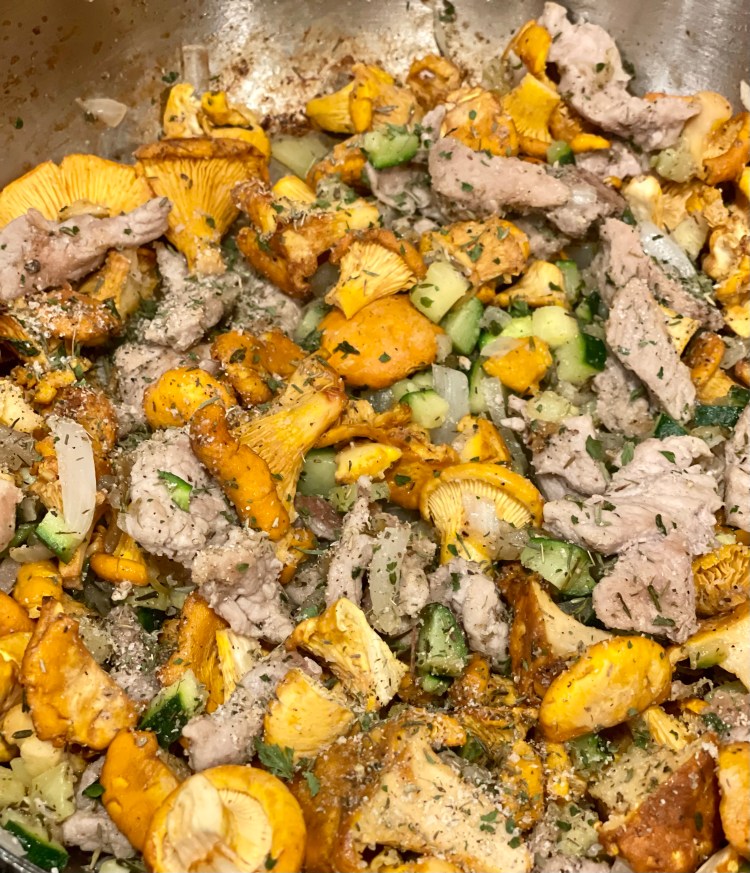
We live in Texas where wild boar is an invasive species, and needs to be hunted to protect the land and wildlife balance 😅
After learning about that, I grew curious, and was able to purchase boar medallions from my favorite supplier Broken Arrow Ranch, which is known for state of the art field harvesting and quality 😋
1 can of coconut cream (whipping cream works too if you can have dairy) 🥥
How to:
Dice the meat and onions while heating up lard in a large pan. When the fat is hot, fry the meat to get a nice crust and season with salt and pepper. Next, add in the diced onion and season with more salt, pepper and garlic powder!
Then dice and add in the zucchini and let everything come together, about 5 minutes. Then add in the chopped chanterelles and again season.
Let it all come together for another 5 minutes and pour on the can of coconut cream 🙌🏻
Season to taste and let the cream condense down a little. Then add the miracle noodles or prepare the almond flour noodles and mix them into the pan!
Happy Functional Friday everyone 🥰❤️ in todays post we will be tackling the topic “am I eating enough protein?”.
If you’re new to my blog, I am Helen, a certified functional blood chemistry specialist and each week I will be making standard labs more accessible to you all 🙌🏻 to check out previous posts, just click on the functional Friday section of my blog!
As always, this is not medical advice, so please contact your health care provider if you feel unsure or want to implement major changes 👨🏻⚕️
Todays topic is all about protein, and we will be accessing if you may need to consider eating more animal protein based on two markers found on the Complete Metabolic Panel- creatinine and BUN!
Both creatinine and BUN are byproducts of protein metabolism, produced when the liver and kidney process amino acids.
When we consume protein, the liver metabolizes it into amino acids and the by-product ammonia. Ammonia is toxic and needs to be turned into urea, and then is sent to the kidneys to be excreted in the urine. Urea is called BUN (blood urea nitrogen) on blood work!
The functional range for BUN is 12-18 mg/dL
If your BUN falls below that range, it can be assumed you are not eating adequate protein to support your bodies needs.
Creatinine is a by product when created when muscles produce energy from creatine. It is filtered out of the blood by the kidneys and excreted through the urine. Both humans and animals we consume store creatine, so people with low muscle mass or those who don’t consume enough animal protein will have low levels which is reflected by a low creatinine measure in the blood.
The functional range for creatinine is 0.7-1.1 mg/dL
Keep in mind that workout before a blood draw can falsely elevate your creatinine levels since you will be breaking down muscle (and creatine) for a brief time after you work out.
Additionally, those with a low muscle mass could be eating enough animal protein but their creatinine is just low since they don’t have much creatine stored in their tissues. If your BUN is in range, but your creatinine is on the lower end, and you’re a smaller person, it’s likely your protein intake is adequate: assess your diet and decide for yourself.
What can you do:
If both of your results are on the low end, it’s a good indication that you could benefit from increasing your intake of animal protein and seafood.
Try to aim for at least 0.8 g of animal protein per pound of ideal body weight. That’s usually about 1 pound of meat/eggs/fish a day for a woman and 1.5-2 pounds of meat/eggs/fish for men! I know it sounds like a lot but our bodies depend on proteins for so many processes.
Proteins are the backbones of our hormones, neurotransmitters, enzymes and make up all of our tissues and structures. We need protein to thrive!
For those who cannot eat that much, supplementing with a high quality collagen, beef protein isolate, or bone broth protein powder is an excellent option to get in 20-25g of quality protein into your diet. We love to mix in a scoop of chocolate flavored collagen into our morning coffee to start the day off right 🙌🏻
You can also use collagen powder in soups and baked goods to increase your protein intake.
We are also a fan of essential amino acid supplements which are utilized to about 99% by our bodies. One serving is about as much as 4 ounces of chicken breast (about 25 g of protein) and can also be easily mixed into coffee or water. I take it daily and my muscle mass as increased substantially since! I love to use BodyHealth Perfect amino powder and you can save using my link.
Additionally, eating 3 solid meals rather than many small ones will help you achieve your protein goals. I try to aim for 35-40 g of protein for each meal in addition to my protein supplements. That’s easily done by eating 5-6 ounces of meat with lunch and dinner and a couple of eggs with some bacon or liverwurst for breakfast.
For those who can have dairy, plain Greek yogurt or cheese are also solid options.
High quality meat and seafood can be easily sourced online: you can check out my guide here:
Whole chickens also make a great option, you can roast it and then use left overs for bowls and salads.
Canned fatty fish like mackerel, sardine and salmon can easily be thrown onto or turned into a salad. The possibilities are endless!
And of course the humble egg doesn’t only need to be the star of breakfast. Enjoy frittatas, egg cakes, baked avocado eggs, or deviled eggs with your favorite smoked salmon or other meat dish! When eating eggs alone, you should aim to eat 3-4 minimum to hit the protein goal.
If you’re eating enough but your markers are still low, it’s possible the problem is your digestion. It may be a good idea to supplement with a stomach acid and digestive enzyme to make sure you’re getting the nutrients your eating.
Lastly, if you have low muscle mass, this is a great opportunity to up your workout game and incorporate targeted strength training in addition to increased protein intake. Muscle is our longevity organ, and our goal should always be to add on to it 💪🏻
Happy Wednesday 🙌🏻😇 today I would love to share one of our recent creations that really enhances our favorite seafood dishes like branzino, trout and salmon 😇
Looking for a nice way to spice up steamed green beans ? Look no further, bacon and fresh parsley give them a nice upgrade 🥰
I always love the smell of bacon and it’s really important to find an uncured sugar free one from pasture raised pigs that are need a species appropriate diet, I really love Northstar Bison, and you can get yours 10$ off using my link 🥓👏🏻
Start by trimming your green beans and either blanch them or steam them. They using need to cook 8-10 minutes!
While those are cooking, dice the bacon slices and fry them until crispy brown, you can optionally add in diced onion 🧅
When the beans are cooked, drain the water. Now you can either throw them into the pan with the bacon (so that they can pick up some flavor), or you can remove the bacon from the pan and add it into the pot. Add the chopped parsley and sea salt and toss. Either way, it’s delicious 🤤
If you can tolerate butter, I highly recommend you throw on some garlic butter (recipe here) and serve with your favorite main course!
Welcome to Functional Friday 🌈 a series I have created to help everyone decipher their lab work and gain some clues where your body may need support. As a certified functional blood chemistry specialist, I hope to explain topics so that you all can understand, if you have any topic requests, feel free to comment below 🙌🏻
As with all my posts, I want to point out that this is not medical advice, I don’t know your personal situation so please always check with your provider if you have concerns or questions!
Today, I will be addressing a few markers found on the Complete Metabolic Panel which most people have run every year by their doctors. It is a very handy and can give a lot of clues about your health status. Today we will be (using it to assess if your adrenals are stressed by) looking at your electrolytes (mainly sodium and potassium).
To assess these markers, it’s essential that you are not dehydrated, you can check this by looking at albumin which is also on the complete metabolic panel. If albumin is over 4.8, you are most likely dehydrated and your electrolyte markers may be falsely elevated due to hemoconcentration (less water/blood volume= higher concentration or minerals). Since both sodium and potassium are affected by hemoconcentration, you can still look at the ratio to unravel some clues.
Your adrenals are your bodies electrolyte balancers and if they are overburdened ie stressed, homeostasis is not achieved and it will show up in your blood work.
Particularly sodium and potassium have to be properly balanced since they run sodium-potassium pumps throughout the whole body which regulate almost every metabolic process including the transfer of nutrients across those cell membranes.
A sodium potassium pump at work- sodium is in the interstitial fluid while potassium is found inside the cell. The transport is facilitated by a concentration gradient.
Sodium is mainly an extra cellular mineral and also affects blood volume (where sodium goes, water follows). This can impact blood pressure, leading the the myth that excess sodium in the diet can cause high blood pressure. In reality, our dietary intake or both sodium and potassium do very little to our blood levels of the minerals, which are mainly influenced by aldosterone. When aldosterone becomes disregulated, so do the blood mineral levels. Severe examples of this are kidney disease and diabetes.
The functional range for sodium is 137-143 and most balanced bodies have a sodium range they like to sit at. For me, my sodium is typically 140 and doesn’t really budge.
98% of our potassium levels are found inside our cells making it a primarily intracellular electrolyte! In addition to working with sodium to power the Na/K pumps, it plays an important role in muscle and nerve function.
The optimal functional range for potassium is 4-4.5. Since potassium is an intracellular electrolyte, you can see that the amount in the blood is a lot smaller than sodium which is primarily extracellular.
Aldosterone is a hormone that works with the kidneys to regulate the sodium and potassium levels through retention or excretion in the urine. It’s also how the body regulates blood pressure.
In a healthy balanced body, potassium and sodium levels should “line up” meaning that either both are at the end of the normal range, both are in the middle, or both are at the top. This is important since the two work together to power the sodium-potassium pumps found on every cell. If they don’t exist in the correct balance, problems can occur.
If it’s high, you’ll retain sodium (and water) and excrete potassium. You can tell if you have high aldosterone activity if your sodium is higher and your potassium level is lower (sodium is being retained, potassium is excreted).
A striking example of sodium and potassium pulling apart!
High aldosterone correlates with excess adrenal activity, indicting that there is something stressing the body. This can be anything from mental or emotional stress, to be eating inflammatory foods, unbalanced blood sugar, heavy toxin loads or infections. Regardless of stressor, your adrenals react the exact same way- they release cortisol. High amounts of stress result in excess cortisol being released by the adrenals (meaning they have more work). Another common side effect of high cortisol is weight gain on the stomach and face!
Low aldosterone shows up as low sodium and high potassium levels and also mean that the adrenals aren’t performing as they should. If you are chronically stressed, your adrenals become burned out. Sluggish adrenals aren’t able to produce enough aldosterone to balance mineral levels leading to low sodium/high potassium.
Although not a perfect example, in this case you can see elevated potassium and sodium levels on the lower end (since the patient was dehydrated, sodium would be even lower). The two markers are pulling apart showing low aldosterone activity!
To sum up, if there is asymmetry in the Na/K ratio, it is possible that your adrenals are stressed.
What can I do?
If you’re reading this and it sounds like you, it’s best to listen to your adrenals and help them calm down or speed up before other things begin to become unbalanced. Adrenals are a foundational organ, and are critical for energy metabolism. If you have hyperactive adrenals (high aldosterone) they will eventually burn out and become sluggish (low aldosterone)!
Luckily, adrenals are very responsive and should be able to recover if you nourish them.
First and foremost, your adrenals start to panic if you’re not consuming enough calories, particularly protein and fat. A good starting place would be to emphasize eating high quality animal protein with every meal and to supplement with collagen peptides. These can be stirred into coffee or made into a smoothie with cacao powder, stevia, nut butters, and coconut milk for example.
It’s also a good idea to get an idea of how much you’re eating, a lot of the time, it’s less than we think or the nutrient density isn’t very high. Focus on adding in highly nutrient dense foods to nourish yourself. Your adrenals will thank you!
Your first meal should ideally be protein, fat and fiber heavy (like most meals), you can check out my guide to breakfast here !
Fat, fiber and protein are critical for stabilizing your blood sugar, as dips and spikes are an additional stress on the adrenals.
Like I mentioned earlier, you cannot balance sodium and potassium levels by eating more or less in your diet but that doesn’t mean that you should not be consuming high quality sea salt and electrolyte blends, especially if you’re on a lower carb diet.
My favorite electrolyte supplement is LMNT and I use plenty of sea salt in my cooking! You can get LMNT at a discount using the hyperlink!
Your adrenals also need plenty of vitamin C to be happy, which is best obtained in its raw food form, not as ascorbic acid. Food sources include broccoli, brussel sprouts, lemons, and bell peppers. Challenge yourself to incorporate those into your meals.
I really like camu camu powder or acerola cherry powder for this 🍒
Organic Vitamin C by Cytoplan is a great option, it’s food based and contains bioflavonoids and phytonutrients to help your body utilize it!
Jigsaw Health also makes a product called Adrenal Cocktail which contains sodium, potassium and vitamin C to nourish your adrenals. It is recommended to drink this daily (even for healthy people).
There are also many recipes online to make your own, but beware, most use sugary beverages like orange juice or coconut water or lack one of the components (Vitamin C, Na, K).
Some people who struggle to consume enough fat and protein can benefit from adding some fat and collagen peptides and make it into a yummy morning ritual.
I like this recipe: mix everything or blend with ice for a slushy
2000-4000 mg Vitamin C Powder
Stevia to taste
Fresh squeezed lemon juice to taste
1 cup coconut milk, unsweetened
1 scoop vanilla (or unflavored) collagen
1/4 tsp cream of tartar for potassium
1/4 tsp sea saly or pink Himalayan salt for sodium
Essential Fatty Acids are also critical and can be found in small fatty fish, like sardines and mackerel, salmon, grass fed meats, butter, eggs, and some nuts and seeds. You can also supplement with cod liver oil, my favorite is Rositas!
Magnesium is very important too, as it plays a role in almost every enzymatic reaction in the body! Due to modern agriculture, we are almost all depleted in magnesium and need to supplement. Diet usually is not adequate. I like Pure Encapsulations Magnesium Glycinate which also has relaxing properties. Food sources include cacao, almonds, leafy vegetables, pumpkin seeds and avocado!
B Vitamins, especially B3, B5, B6, also play a big part in regulating the adrenal cascade, which can be found in all animal products and leafy greens. I really like Biotics B complexes as they are not petroleum based and in bioavailable forms!
Lifestyle is also incredibly important for adrenal health. Make it a goal to move your body daily (ideally not a super intense workout since that can temporarily stress your adrenals), via gentle movement like yoga, walking and some weight training!
Sleep is also critical, so please make it a priority to sleep 7-9 hours and have a set routine. In the morning when you wake up, go outside and let your body see the light to establish a healthy circadian rhythm ☀️ sunlight throughout the day is also super nourishing for your mitochondria and adrenals! I like to wear blue light blockers after sunset so that my circadian cycle isn’t interrupted!
It’s also helpful to take some time during the day to breathe and focus on yourself. This doesn’t have to be a formal meditation, but pausing throughout the day gives your body time to recalibrate. There is also a program called HeartMath that helps regulate your nervous system via breathing and continuous feedback based on heart rate variability!
Most of you will hate me for this, but please don’t over-consume caffeine! When our adrenals are stressed, it seems like a good idea to grab a cup of coffee to temporarily boost our energy and focus, but that’s robbing even more energy from our poor adrenals. Try to minimize coffee to 1-2 cups in the morning and stick to green tea for the remainder of the day.
All in all, your adrenals need to feel safe to function optimally, and unfortunately, modern life has taken that safety from them. With time, nourishment and lifestyle changes, you can heal them, so show them some love ❤️ one step at a time, remember, you don’t have to do everything but pick a few things to master and then add on! Consistency and patience is key!
Happy Wednesday 😇 today I’m sharing another simple lunch pan that is thrown together in less than 20 minutes and makes a great healthy lunch 😍
Actually my mom threw it together so shout out to her for getting in her healthy fats and omegas, proteins and veggies 🌈
I also want to point out that she is so great at cutting vegetables and making them look neat, which is important since it helps stimulate her cephalic phase of digestion (the brain helps prepare the system to digest) 🧠
Since it’s summer, we are eating a lot more seafood since it’s lighter, so please bare with me, the winter will feature more meaty recipes 😋
Todays bowl features miracle noodles which are one of my favorite pasta swaps, in addition to canned poached octopus, juicy zucchini, bell pepper, fresh herbs and arugula all married together in a tomato sauce and plenty of olive oil 🫒
For one bowl you need:
1 package of miracle noodles 🍜 – zoodles could work too ☺️
1 small zucchini 🥒
1 bell pepper 🫑
Arugula 🥬
Basil 🌿
Onion 🧅
Tomato sauce 🥫
1 can of octopus 🐙 or you could substitute shrimp or scallops (any seafood you like)
Garlic powder, salt and pepper 🌶
Extra Virgin Olive Oil 🫒
How to:
Start by sautéing the onion and the finely chopped zucchini and bell pepper in olive oil. When that has a nice texture, throw in the miracle noodles and season with salt, pepper, and garlic powder.
Pour on the tomato sauce and let it simmer, season again and add the basil and arugula.
Since the octopus is already cooked, throw on the octopus when everything else is ready to heat it up! Enjoy 🤩😍