Valentine’s Day is just around the corner which means that candy and chocolate is everywhere! My mom and I are suckers for white chocolate but that’s usually full of milk and sugar, so we got creative and created our own coconut based white chocolate with allulose 🙌🏻😋
My mom really loves whole nuts in her chocolate and her favorite is hazelnut, so we decided to roast some in allulose and pour the white chocolate mixture over that, creating something like a chocolate bark 😉
The hazelnuts can be substituted for any nut or seed or maybe even a favorite keto cookie or coconut chips 😍
For those who are purists like me, you can leave out the nuts and just make the chocolate base recipe. We will be coming out with a better pure white chocolate version in the future so stay tuned 😎
Here are the ingredients to make a block of bark that you can break up into small (or not so small 😉) chunks 👩🏻🍳:
7 ounces of pure organic cacao butter, we like Sunfood
3 ounces of allulose, we used madhava brand
2.5 ounces of powdered coconut milk powder, we used Kos Brand (make sure to check if it has any additives like starch)
3.5 ounces coconut butter
Fresh ground vanilla
Roasted nuts, seeds, etc
To make:
Begin by roasting the nuts in a pan on not too high heat to avoid oxidation. While the nuts are roasting, prepare a freezer friendly dish by covering it in food wrap or foil so that you can easily remove the chocolate
Set up a water bath by heating up water in a pot and placing a smaller pot over the hot water. Place the cacao butter and coconut butter into the top pot and slowly melt them!
When they are molten and have formed a homogeneous mixture, add in the allulose
Next, add in fresh vanilla and coconut milk powder
Lastly, spread out the roasted nuts in the freezer ready dish and pour on the chocolate mixture! Then freeze it until it’s solid and break it into pieces!
We store ours in a glass container in the freezer and take out a few pieces a few minutes before we are ready to eat. Since it’s basically a block of fat, it can became a bit soft at room temperature!
Chicken, turkey and other poultry can be a very nourishing addition to our diet when raised properly, meaning on pasture where they can forage on plants and bugs (chicken are not vegetarian!!) and ideally in a regenerative setting!
Not only is buying pastured chicken (and eggs) better for the animals and the planet, but it’s also much more nutritious and healthier for us. At the end of the day, we are only as healthy as what we eat was.
It also tastes significantly better, especially when you buy a heirloom and slow growth breed that hasn’t been hybridized for maximum output/speed which dilutes flavor. I’ve often heard chicken referred to as a bland food, almost resembling tofu that needs lots of seasoning to be palatable. In my opinion, chicken should have a distinct taste and be delicious with just some salt🧂
Do you see the color difference ?
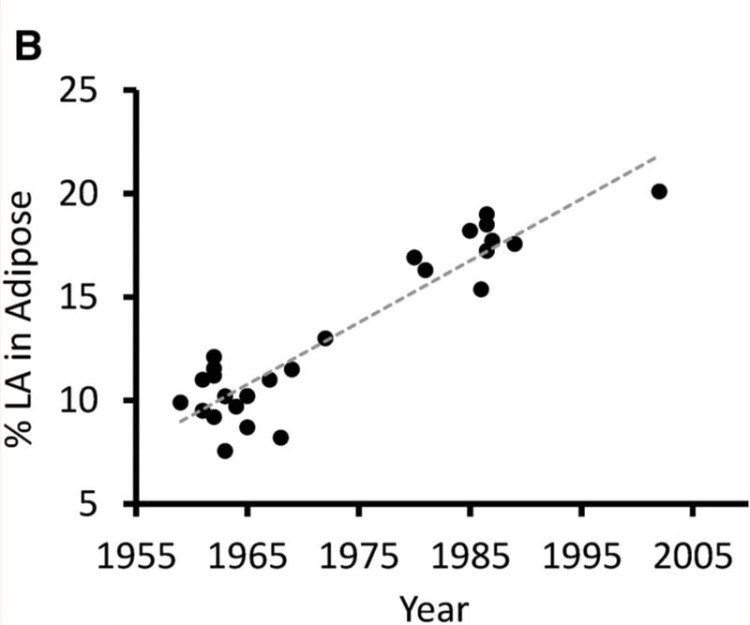
A problem with factory farmed chicken is that the birds are fed a diet that they were never intended to be fed: lots of GMO grains, most notably soy and corn. Chickens cannot really process the high amounts of omega 6 in grains and they get unhealthily fat, and their meat contains an abnormal ratio of omega 3:6 fatty acids. Their metabolism cannot convert the fatty acids in grains into stable saturated fat like ruminants can, so they have an unhealthy and dangerous fatty acids profile (both for them and the humans that eat them).
The graphic below does a good job of comparing the change in Omega 6 fatty acids found in chicken meat over the past few decades:
Nutrients in Chicken and Poultry:
Chicken is full of complete protein, which is important since our bodies need all essential amino acids to correctly build our tissues and cells 💪🏻
The skin and bones are full of Collagen and glucosamines which you can reap the benefits of if you cook bone in cuts 🍖
The meat also contains many of the essential b vitamins including B6, B12 and niacin which are all important for mitochondrial health and detoxification!
Chickens fed a species appropriate diet also contain some healthy omega fatty acids but overall, chicken is a lot leaner than beef or bison. When eating chicken, I always add extra butter or add a fatty side like avocado to make sure that my body can absorb and utilize all the nutrients. Especially a chicken or turkey breast is very lean.
I love these two graphics posted by Strong Sistas: they emphasize the importance of pasture raising poultry and feeding them a species appropriate diet
Where to buy: I love to buy a whole chicken and roast it, not only because it’s more economicalf and I can eat leftovers in my big fat salad, but I also find that that’s the way to honor the animal, eat nose to tail and get all the flavor and nutrients from the whole bird including healthy fats, collagen and amino acids!
Finding high quality chicken is pretty difficult since most farmers feed their pasture raised chicken and Turkey a supplemental feed that usually consists of grain, or non-gmo corn/soy if the chicken is organic.
Always look for an organic chicken since that ensures that the chicken was not given antibiotics or gmo feed. That is a non negotiable for me.
You can also look for animal welfare certifications on packaging, and you can feel pretty comfortable buying anything better than step 3, although I try to only buy 4 or better.
At stores like Whole Foods, Marys chicken and Turkey products are usually a good pick (they are step 4) and come in a variety of cuts (breasts, wings, drumsticks, thighs, whole birds, and ground).
Whole Foods also sells chicken sausages from Bilinski which taste yummy and are step 3 as well!
Some grocery stores also sell Force of Nature, which is a brand dedicated to selling only regeneratively raised animal products, and they have some chicken products as well. I’ve seen them at Whole Foods and other grocery stores, or you can shop their website!
Ideally, the chicken is pasture raised and fed a soy and corn free feed. I really like US Wellness Meats, White Oak Pastures or Northstar Bison because all have corn and soy free poultry options .
All have a wide variety of cuts including sausages, ground poultry, organ meats and whole birds.
You can save 10$ at Northstar Bison if you use my referral link.
If you get ButcherBox delivered to your house, they also sell pastured chicken products you can add to your next box 🐔
Although I am a huge advocate for consuming ample animal fat, if you cannot get a high quality source of poultry, I always recommend the leanest cuts to avoid consuming PUFAs or toxins since animals store those in their fat. Also, stay clear of pre roasted grocery store rotisserie chickens, since those are usually cooked in inflammatory seed oils and with hidden nasties in the seasoning!
Recipe Wrap: some of our favorite ways to incorporate pastured chicken into our lives
In order to get my fair share of Omegas and because I love fish so much, I try to incorporate some sort of grilled or baked seafood in addition to my canned SMASH fish (yummy with salad, guacamole, or in my seafood “pasta”) a few times a week.
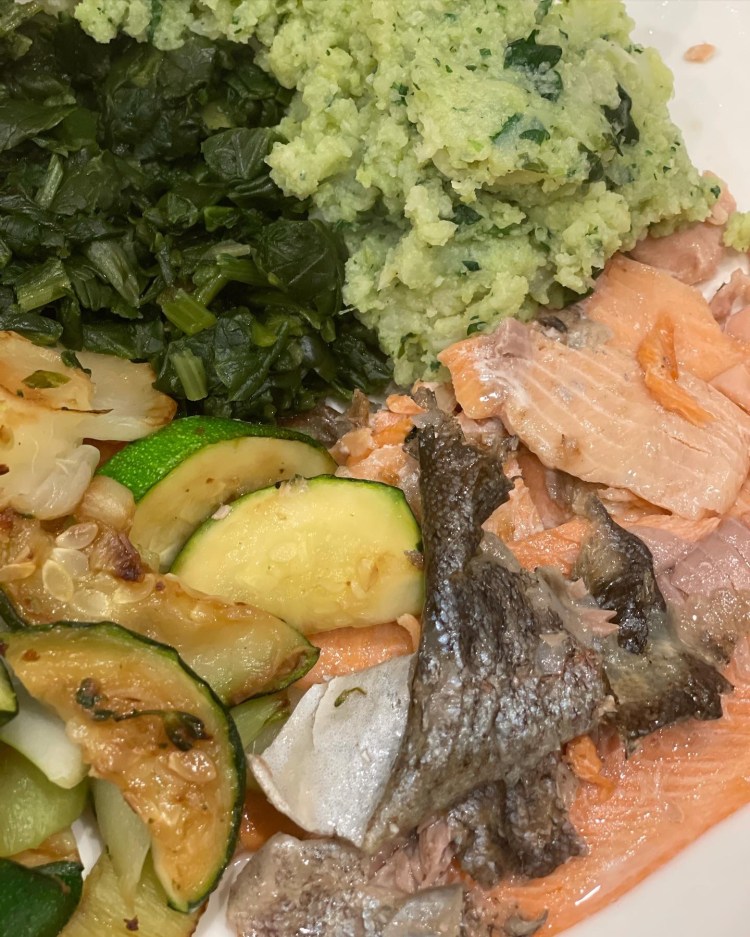
While I am a huge fan of Vital Choice wild caught salmon (both sockeye and king salmon are so delicious 🍣), I also really love to eat trout, which is also part of the Salmonid family. As a little girl, I always devoured smoked trout and have recently come to love fresh trout as well.
The variety I buy is rainbow trout, but like with salmon, there are many different breeds. Although I typically prefer wild caught over farmed fish, the company I purchased mine from (Rainbow King Foods) gave me confidence that I was buying a quality product.
Trout is listed as one of the healthiest seafood sources of omega-3 fatty acids, and rightfully so: not only is farmed trout packed with beneficial omega-3 fatty acids, it is also relatively low in contaminants like mercury and PCB which have been raising questions about the safety of seafood.
-Rainbow King Foods
I actually loved the fish so much that I am now working together with Rainbow King Foods and they have given me a discount code I can share with you all! To try the fresh or smoked filets click here and use code CUREATED at checkout!
Rainbow trout is pretty similar in its nutritional profile to salmon, but is a bit higher in vitamin B12 and certain minerals such as phosphorus! Compared it salmon, it contains less polyunsaturated fatty acids and a bit more DHA and EPA! The taste is like a milder version of salmon, so it’s a great starter fish for those who don’t like seafood that much 😉
According to the supplier: – Studies reveal the total amount of fat and the total amount of EPA + DHA in farmed rainbow trout fillets were 5.9
– This is 3.2-fold higher, respectively, than in their wild counterparts. – The average total amount of omega-3 fatty acids was around 700 milligrams per a 100-gram portion, an amount that is nearly as high as the amount of omega-3s found in wild salmon. – The total amount of omega-3s in the wild trout samples was around 200 milligrams.
Here is the nutritional information from the supplier, as you can see it’s very high in healthy fats!
Like my salmon, my go-to method to maintain a juicy trout filet is to quickly sear it and then to bake it for 2-3 minutes at 400°. You can season it however you like but I usually just go for flaked sea salt and maybe a drizzle of lemon juice and butter 🧈😋
For one serving you need:
1 filet of fresh trout (they are usually between 4 and 6 ounces) 🐠
Preheat the oven to 400°F and heat up ghee in an oven safe pan! We like to use All-Clad stainless steel pans 👩🏻🍳
Next, pat the filet try and season liberally with flaked sea salt on both sides.
Fry the fish skin side down for about 2 minutes, then flip it, and put a lid onto the pan, and transfer it into the oven to bake for 1-3 minutes depending on how thick the piece is. I like to eat mine when it’s medium and when in doubt, remove it earlier since it will continue to cook a bit after the heat is taken away.
To serve: you can choose to drizzle some lemon juice and butter over the fish, or season it with herbs like dill, parsley or chives!
Left overs can also be thrown into a fat fueled salad for lunch the next day, or eaten with guacamole as a taco in a tortilla swap! The possibilities are endless 🙌🏻
If you want to have a taco night, enjoy with a tortilla swap and grilled fish, steak or chicken 😍🌮
If you package it well, it keeps in the fridge and makes a great nourishing snack with cracker swaps!
To make guacamole you need: this generally feeds 3 but can of course be scaled
3 Ripe avocados, the variety doesn’t really matter but we find bacon or Hass are the creamiest. I get mine from a subscription service called Avocado Organic that sends them to my house fresh from the tree 🥑
1 stalk of green onion 🧅
4-5 small tomatoes 🍅
Fresh herbs like basil, cilantro or chives to taste 🌱
Lemon or lime juice to taste 🍋
Garlic powder, salt and pepper to taste 🧂
Avocados and tomatoes from the local farmers market 😉
Begin by finely chopping the onion and the herbs and removing the pit and skin from the avocados 👩🏻🍳
Place everything into a shallow bowl
Add seasoning and lemon juice and then mash with a fork 🍴
Lastly, quarter the cherry tomatoes and then mix them into the avocados.
As a little girl, Chicken “geschnetzeltes” (diced chicken breast in a heavy whipping cream sauce with spices) was a stable week night family meal 🥘 and this meal still is still a nourishing fat fueled dish if you can tolerate dairy.
Since I now only eat butter and ghee (heavy cream still has trace amounts of milk protein which I react against), we have swapped and recreated my childhood favorite with coconut cream. For those who can eat heavy cream, feel free to use that instead for the real deal 😎
This is typically served with potatoes, pasta or rice but we love it with cappellos pasta, miracle noodles or riced cauliflower with ample non-starchy veggies on the side 🥦🍅🥥🥛
Making this is super simple:
To feed 3 people gather up 👨👩👧
1. pasture raised organic chicken breast or turkey breast cutlets diced (we love US Wellness Meats) 🍗, about 1.5 pounds
2. organic coconut cream (we use Thrive Market, Native Forest or the Whole Foods Brand) 🥥
3. Salt 🧂 (we use Celtic Sea Salt Brand)
4. Pepper
5. Curry and Garlic powder to taste (we love Morton and Basset)
6. Lard from Fatworks, ghee or Extra Virgin Coconut Oil 🧈
7. Parsley or cilantro to garnish 🌱
First, heat up the cooking oil or choice in a pan, and add the cubed chicken breast. Let it brown on each side.
Next, season liberally with salt, pepper and curry/garlic and let the seasoning soak in.
Once the chicken is fully cooked, add a can of coconut cream and let it bubble a bit!
Chop up some fresh herbs and add them in 👩🏻🍳
Serve with veggies and sides of your choice and feel absolutely nourished 🥰
Traditionally the dish is served with potatoes, rice or noodles. Check out my pasta and rice swaps here!
We chose Romanesco Mash and boiled brussels and carrots 🥕🥦 with plenty of grass-fed butter 😋
If like me you thought that pork was “the other white meat”, I have to tell you that that’s indeed fake news!
If a pig is raised properly, it has a beautiful red color almost resembling that of beef! Unfortunately, the way pork is raised today results in pale meat, which means that the animal was anemic ☹️
This is a pork tenderloin that we cut up to make Tournedos 🥩 the bright red color indicates that the meat is super nutrient dense and that the animal was not anemic !
Good news is that there are still farms that raise heirloom pork breeds with integrity- feeding them what they should be eating and letting them roam around on pasture or in the forest.
Pigs, like chicken are foragers and do best when kept on pasture where they can graze and eat insects! They are also especially fond of acorns and vegetable scraps! It is also important to note that pigs are not vegetarians, so the label “vegetarian fed” is not an indication of quality.
There is also the myth that pork is an inflammatory meat, but that is only the case if the animal was kit fed and treated correctly. When fed a feed high in corn and soy (PUFAS), the fatty acid profile of the meat changes and the animal itself becomes sick because it was not intended to eat that. When we eat a sick animal, we as a result get sick too!
Heirloom Breeds:
There are also a wide range of pig breeds that are raised. Standard pig farms raise breeds that have been bred to fatten up very quickly, at the expense of flavor.
Regenerative farms like White Oak Pastures prefer to raise heirloom breeds (old breeds that haven’t been hybridized). These are not only healthier, but often times taste a lot better too (especially when they’re fed a species appropriate diet)!
Nutrients in Pork 🐖:
Apart from being a great source of complete protein, pork is also rich in nutrients like selenium , zinc and heme iron which are all important for blood and brain function!
Incorporating pork into a fat-fueled diet is important because it is rich in some nutrients that other animals are not. Thiamin for example!
Like other red meats, pork is full of bioavailable b vitamins like B6 and B12 and trace minerals! B Vitamins are important for every body function, blood building and mitochondrial health, and I recently just learned that they play a key role in clearing lactic acid from the muscle. If you do any form of resistance training, it may be a good hack to consume some pork after working out 🏋🏻♀️
Lard (rendered pork fat) is actually one of natures most bio available sources of vitamin D, which is especially important for immune function! Since it’s high in saturated fat, it’s very heat stable and is a great cooking fat. It’s one of the stables in our house and tastes super yummy. To learn more about cooking fats, check out this post!
Where to buy it:
We use a few different suppliers for our favorite pork products!
For bacon, pork chops and hot-dog sausages, our go to is Butcher Box which sells heirloom breed pork products 🌭🥓
The bacon is especially great because it’s nitrate and sugar free!
Our favorite bratwurst, ground pork and tenderloins are from US Wellness Meats and White Oak Pastures. Both farms place a huge emphasis on animal welfare which is reflected in their super delicious flavor 😋
Being German, it’s very hard to find Bratwurst that tastes as good as at home, but especially White Oak Pastures is spot on 😉
Once in a while, we crave a good prosciutto or pate and have been lucky to find relatively high quality products at Whole Foods. When buying processed meats, quality becomes extra important and you want to make sure there aren’t any weird fillers or added sugars.
My mom really like a pork liver pate from Les Trois Petits Cochons which is without added sugar and dairy and from pigs that were raised according to Step 3 of the animal welfare certification. That’s the best we can find so far and is available exclusively at Whole Foods 🐖
Whole Foods also sells prosciutto and speck americano from a company called La Quercia! This company also uses heirloom breed pork. They also have a collaboration with White Oak Pastures where you can buy some spreads and deli meats from bigs raised on this regenerative farm 🙌🏻
Some stores also carry Force of Nature, which is a regenerative brand that focusses on raising animals the right way! They have some pork and boar products and that’s the best thing you can get at the store in my opinion!
We use a lot of lard as well which we like to get from companies like Epic or Fatworks although regenerative farms like the ones mentioned above sell them too! You can also collect drippings when you make bacon and use those to cook, but I’d use those relatively quickly. Check out my guide to ancestral fats!
If you like game meats, I also highly recommend wild boar meat. It makes super yummy steaks and also meatballs. My go to source for wild boar meat is Broken Arrow Ranch. Whole Foods also sells a ground boar product from Force of Nature which is a great brand!
Recipe Wrap:
Pork is super easy to integrate into your daily life, you can whip up:
A good grass-fed butter is a staple in our house, probably one of the products we use the most 🥺
You can read about the benefits of butter and ghee here!
While I am a purist and prefer plain butter or ghee most of the time, my parents love to spice things up so we have gotten creative 🥳
Today I will be sharing the first recipe in my “homemade butter” series 🙌🏻😋
While there are great pre-made alternatives such as the Lewis Road Creamery Garlic and Chive butter, it can be fun to experiment with new flavors and fresh herbs at home.
To start, I will be sharing a classic: a good old garlic and herb butter 🧄
As a base, we used 100% grass-fed pastured salted butter from Lewis Road USA. The butter is so yellow, I just feel great eating it knowing that it’s the highest quality.
We seasoned the butter with garlic and onion powder, as well as some fresh chopped chives from our local hydroponic farmer 👩🏻🌾
Alternatively you could use parsley or basil as well 👍🏻
Making the butter is very simple:
Take the butter out of the fridge so that it’s easy to mash
Next, finely chop the herbs 🌿
Season to your liking and mash everything together with a fork. Then transfer it into a nice dish and put it into the fridge to get the desired consistency 👍🏻
Butter and ghee from grass-fed and pastured cows are an extremely nutritious source of fat, and should have a place in a fat-fueled diet.
Even those who have a dairy protein or lactose allergy can enjoy cultured ghee since it’s just the milk fat. Our go-to brand is Pure Indian Foods cultured ghee, which is third party tested to verify that it’s truly only the milk fat (and all the good nutrients)!
You can recognize a nutrient dense butter or ghee by its color- like with eggs- the more yellow/orange the product is, the better. The butter made from cows milk where the cows ate the first grass of the spring is especially yellow since the fresh grass contains so many nutrients!
Dr. Weston A Price (a dentist who studied the affects of ancestral and western diets on human physiology and degeneration) found that this special butter is especially full of a special nutrient which he coined “Activator X”, which is known as vitamin K2 now. This “first butter” contains higher amounts of K2, but it’s still abundantly found in regular grass-fed butter as well.
Vitamin K2 is the bio-available form of vitamin K (vitamin K1 is found in some leafy greens but the conversion to K2 is very small, only about 10% if your body is efficient). Vitamin K2 is essential for bone health as well.
Without K2, our bodies have trouble absorbing other vitamins and nutrients. Weston A. Price actually discovered that without vitamin K2 and other fat soluble vitamins, the body cannot utilize minerals and other micronutrients, even if they are abundant in the diet.
Arachidonic acid is an important fatty acid that’s super important for skin, intestinal and brain health. It also helps boost fertility and helps with blood clotting. It also makes up a large part of our cell membrane.
Butter also supplies a bio available form of selenium and iodine, which are easily absorbed by the body and critical are for proper thyroid function 👍🏻
Grass-fed butter (like grass-fed beef and bison) is a great source of CLA which is another super beneficial fatty acid. CLA is anti-inflammatory and great for the brain and nervous system and has been said to have anti-cancer properties and aid in muscle growth 🙌🏻
Other fatty acids in butter and ghee include short and medium chain triglycerides which are also very anti-inflammatory. Like coconuts, butter is one of the only other sources or lauric acid which is anti-viral and anti-fungal!
Stay tuned for a whole series of yummy homemade herb and spice butters🧈 (as I create the recipes I will be posting them below 👩🏻🍳)
This is a quick way to prepare a yummy and nutrient dense dinner 😋
Grass fed bone-in lamb leg steaks from US Wellness Meats are super tasty and I know I’m offering my body a nourishing meal since the animals are raised only on grass in the best condition, regenerative agriculture is so important 🙌🏻
My favorite part is the super fuel bone marrow that melts out of the bone when the meat is cooking and I love that this dish is truly nose to tail 😍
To make this tasty steak you need 🥩
1 100% grass fed and pasture raised leg of lamb steak, ours was 11 oz/bone-in from US Wellness Meats 🐑
Tallow for frying (we like Fatworks) 👩🏻🍳
Salt, Pepper and dried oregano 🌱🧂
Begin by heating up the tallow in a pan, and season the lamb liberally with salt, pepper and oregano.
Next, fry the steak until brown and crispy on each side, about 3-4 minutes. You want to make sure the meat is not more done than medium, I prefer mine medium rare, because it can get a bit tough.
I spy yummy bone marrow
When it’s still light red, it’d super juicy and a real delicacy! Drizzle with herb butter or ghee and enjoy 😍
I also recommend scooping out the molten marrow and spreading it on the meat for a tasty nutrient boost 💪🏻